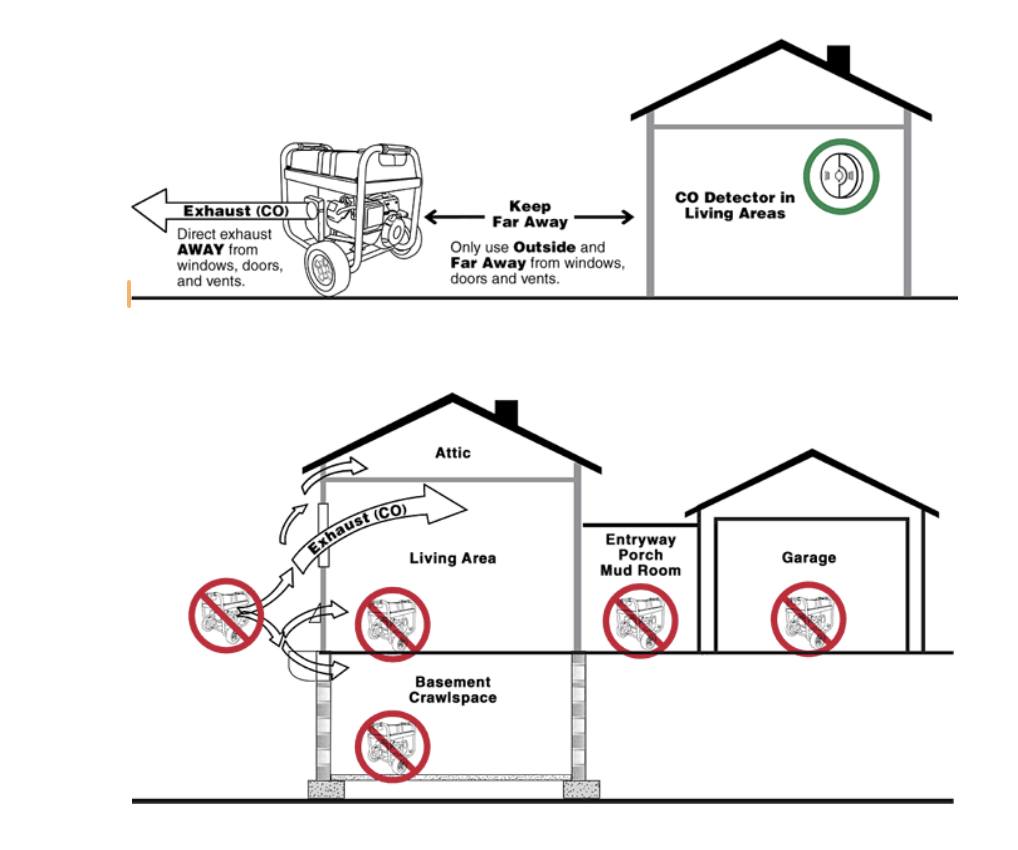
The Summit Fire Department reminds residents to take precautions when using generators during power outages. Emergency power generators offer an option for temporary electricity during power outages. However, to ensure the safety of the home’s occupants from carbon monoxide poisoning, as well as that of utility company employees who may be working on power lines in the area, the proper generator should be selected and installed by a qualified electrician. When operating a generator, the power coming from the home should always be disconnected. Otherwise, power from the generator could be sent back into the utility lines, creating a hazardous situation for utility workers.
Additional safety tips:
- Never use a generator inside a home, garage, crawl space, or other enclosed areas. Fatal carbon monoxide fumes can build up that neither a fan nor open doors/windows can properly ventilate.
- Professionally installed stationary home generators produce carbon monoxide and can cause carbon monoxide to enter the home. Ensure openings near a generator are sealed shut.
- Always use a generator outdoors in a location away from open windows, vents, or doors.
- Always have a working carbon monoxide detector in your home. Check to ensure it is in proper working order, especially when running a generator.
- Use extension cords that are grounded and rated for generator use. Coiled cords can get extremely hot; always uncoil cords and lay flat in open locations.
- Never plug a generator directly into a home outlet. If connecting a generator into a home electrical system, have a qualified electrician install a power transfer switch.
Click here to view additional safety tips and information on generator usage.